New York City Police Department
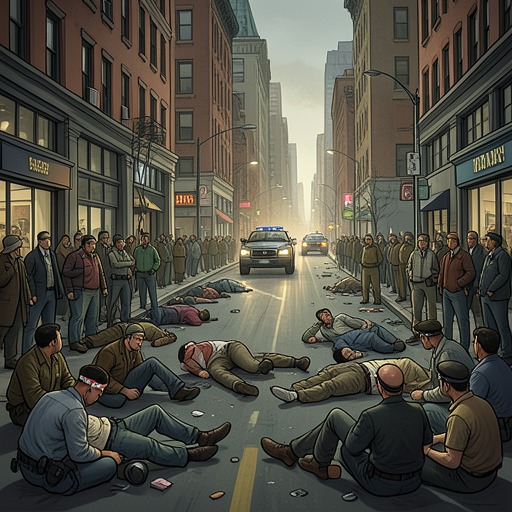
The Dark HalfThe New York City Police Department enters the George Stark case as the agency responsible for acting on threats and incidents in New York. Its involvement is coordinated through Castle Rock Sheriff Alan Pangborn, who relays information from Maine and becomes the practical link between the endangered New Yorkers and the investigation. The department’s work unfolds amid uncertainty about Stark’s identity and the extraordinary evidence connecting him to Thaddeus “Thad” Beaumont.
Role and jurisdiction
When Thad considers whom to contact about the danger facing Miriam Cowley, he rules out the New York City Police Department as his first call: he expects officers to ask time-consuming questions about why a man in Maine is reporting a New York crime. He instead chooses Pangborn, reasoning that the sheriff can contact New York officers directly and that they may act more quickly when the report comes through another law-enforcement officer.
That choice makes Pangborn an intermediary rather than a substitute for the city department. He gives its officers information about a potentially dangerous man who may be targeting people named in a People magazine article about the Stark pen name, including the connection between the Cowleys and Thad. The department obtains Rick Cowley’s address from the telephone company and is told to wait for officers to assess Miriam’s condition before Rick goes to the apartment. The arrangement is intended to prevent her ex-husband from arriving alone and potentially complicating the response.
Response to the threat
After a New York caller tells police that Thad knows the caller’s identity, officers take the report seriously enough to notify headquarters. Rick is asked to go to One Police Plaza to discuss the call, while another officer is to equip his apartment telephone with recording and traceback equipment in case the caller contacts him again. Rick, worried that Thad may also be in danger, wants to alert him before going in.
The department later issues an all-points bulletin for George Stark, using the description supplied by Thad. Pangborn tells Thad about the bulletin, but Thad doubts that officers will find Stark if Stark does not wish to be found. The bulletin marks the case’s shift from a report handled through an intermediary to an active search for a named suspect, even as Thad questions whether conventional police measures can reach him.
Evidence, fiction, and the investigation
The case strains ordinary evidentiary reasoning. In Castle Rock, Thad challenges Pangborn’s suspicion of him by describing a hypothetical identical twin who could have attended a party while Thad committed crimes elsewhere. Pangborn recognizes the scenario as an explanation rather than a confession, but the episode shows how the apparent match between Thad and evidence can generate increasingly elaborate theories about identity and alibi.
Fingerprint evidence complicates that suspicion. Thad points out that the prints attributed to the perpetrator include unusually clear impressions, including a print left in gum and a blood-rolled impression on a rearview mirror, and asks how many comparison points are required for admission. Pangborn explains that Maine requires six perfect comparisons. The discussion belongs to the Maine investigation rather than establishing a New York City Police Department forensic finding; it nevertheless clarifies the evidentiary uncertainty surrounding a case that crosses jurisdictional lines.
The threat itself is entangled with crime fiction. Thad explains that his George Stark novels drew on the hard-edged criminal figure of Parker in novels published by Donald E. Westlake under the name Richard Stark. A tenant who reads crime novels regards George Stark as a celebrated practitioner of the genre, while the police are now searching for a man using that very name. The contrast makes the department’s work part of the book’s larger reversal: a fictional identity associated with criminal stories has become the name attached to a real and urgent threat.
Limits and significance
The department’s actions are concrete and procedural: it receives a reported call, arranges surveillance equipment for a telephone, coordinates a response to a threatened woman, and circulates Stark’s description. But the investigation does not immediately resolve the deeper question of who or what Stark is. Even after hearing of the department’s bulletin, Thad regards the search as likely ineffective, while Pangborn’s accumulating doubts are shaped by evidence that resists a purely ordinary explanation.
The New York City Police Department therefore represents both the reach and the limits of institutional response in the novel. It can coordinate officers, secure information, and pursue a described suspect across a developing case; it cannot, on the evidence presented here, make the boundaries between Thad, Stark, and the fiction that gave Stark his name disappear.